


Dog And Puppy Transport Experts
We’re here to help .
At Dogtainers, we’re dog transport experts. We relocate tens of thousands of dogs domestically and internationally every year. Whether your dog is an energetic puppy, calm senior citizen, or anything in between, we can move them anywhere in Australia or abroad.
Dogtainers Can Take Care Of:
- Overall management of your pet’s relocation
- Advice and schedules for pre-import blood tests and vaccinations
- Endorsements and vet checks with overseas animal health authorities
- Scheduling flights
- Crate hire or purchase
- Airport drop off
- Airport collection
- Customs clearance, if required
- Quarantine reservations, if required
- Quarantine management

TRUSTED SINCE 1994
Why choose Dogtainers
Australia's most trusted pet transport company — 50 years of experience, offices in every state, and a team of genuine pet lovers.
Official RSPCA partner
IPATA member
Australia's oldest pet transport company

Offices in every state
The only pet travel company with local offices and staff in every state, including the Northern Territory.
Accredited and trusted
Official RSPCA partner and IPATE member. Certified from pick-up to delivery.
50 years of experience
Operating since 1974 — moving thousands of pets safely every year.
Pet lovers, just like you
We know pets are family. Every team member shares your commitment to their care.

What Dog Transport Is Like
Air Travel
Pets travel in a temperature controlled environment set to approximately 18 degrees. The compartment is pressurised like the passenger cabin and is dimly lit. With the gentle hum of the aircraft, pets often spend the time dozing before reaching their destination. All crates are secured with zip ties to ensure their safety. Their crates are also fitted with water so the dogs can remain hydrated during travel. For longer flights, pets are checked on during layovers to ensure they’re safe and comfortable.
Road Travel
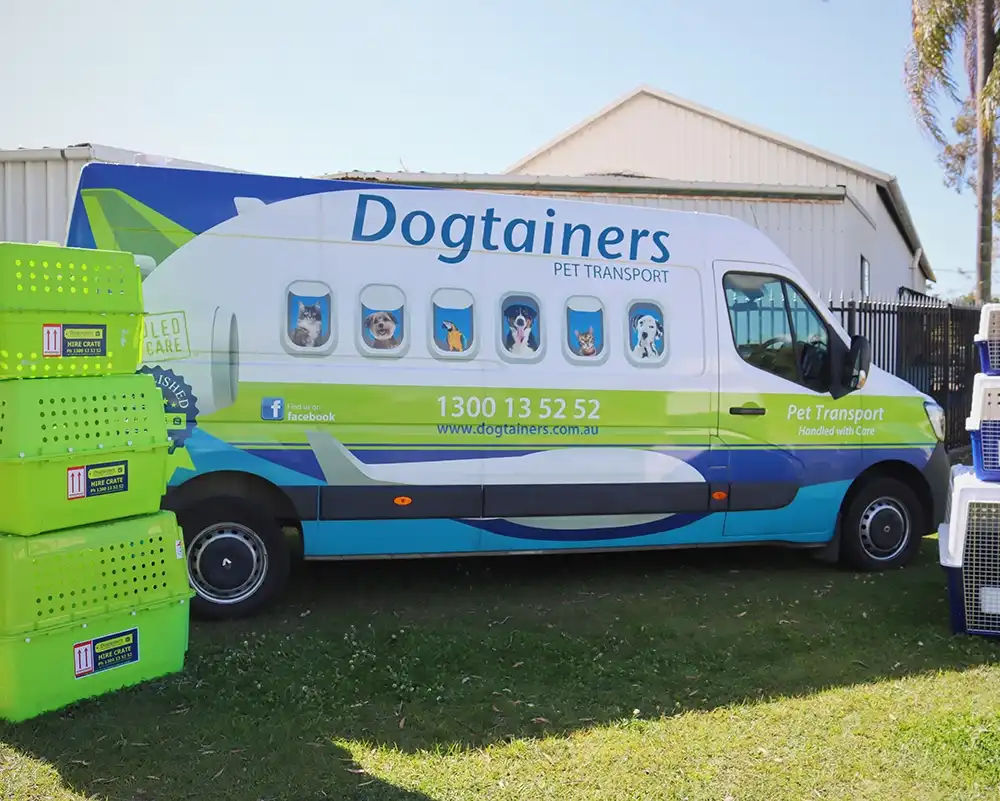
All Dogtainer vehicles are temperature-controlled and designed to safely stow travel crates. To ensure all dogs are doing well, we check on them every two hours to make sure they’re healthy, hydrated, and their spirits are high. We recommend you pack a small, soft toy or your pet’s favourite blanket with them for the trip, as the familiar scent can give them a sense of security.

Keeping Your Dog Comfortable in the Crate
Your pet’s crate is one of the single most important elements of ensuring they will travel safely and comfortably. A crate that is too small for them will result in your pet being uncomfortable throughout the journey. A crate that is too big for them can cause problems, particularly if there is turbulence in the air or on the road. Sizing your pet accurately and getting them an appropriately sized crate can help make your pet feel more secure.
Interstate Dog Transport
-
We provide both air transport for dogs and road transport for dogs to everywhere in Australia. Our most popular destinations include:
- Dog Transport NSW
- Dog Transport QLD
- Dog Transport VIC
International Dog Transport
-
We can relocate dogs to anywhere in the world. We work with dog-friendly airlines and hundreds of local agents in almost every country on Earth to ensure we can get your pet where they need to go.
Some of our most popular international locations include:
PROCESS TIMELINE
Lorem ipsum dolor sit amet, consectetur adipiscing elit. Sed do eiusmod tempor incididunt ut labore et dolore magna aliqua. Ut enim ad minim veniam, quis nostrud exercitation ullamco laboris nisi ut aliquip ex ea commodo consequat.

Step 1
Enquiry
Step 2
Blood tests & vetwork (30–60 days)
Step 3
Final treatments (2–4 days prior)
Step 4
Paperwork and AQIS approvals
Step 5
Check-in & pre-flight care
Step 6
Flight to NZ (~3 hours)
Step 7
Arrival and customs clearance
Step 1
Enquiry
Step 2
Blood tests & vetwork (30–60 days)
Step 3
Final treatments (2–4 days prior)
Step 4
Paperwork and AQIS approvals
Step 5
Check-in & pre-flight care
Step 6
Flight to NZ (~3 hours)
Step 7
Arrival and customs clearance
FAQs About Dog Transport
How Much Does It Cost To Fly A Dog?
The cost of flying a dog varies depending on several factors, including the route, the dog’s size and breed, and the airline. Domestic flights within Australia for a small dog can cost between $80-$200, while larger dogs can cost between $300-$500. The cost of an international flight can range from $500 to $3000 or more, depending on the destination, airline, and other factors. It is important to note, however, that these are only estimates, and the final cost will depend on individual circumstances. It is best to contact for a personalised quote based on your pet’s requirements and travel plans.
What Is The Best Way To Transport A Dog?
The best way to transport a dog is determined by where you are going to and from. Air travel is the quickest and most efficient mode of pet transportation. When travelling locally, however, road transportation is usually the best option.
If you are planning to transport your pet internationally or interstate by air, we can provide the necessary crates, handling, and documentation for air travel. It is important to ensure that our pet is comfortable and safe while being transported and that all requirements are met.
How Do I Prepare My Dog For A Flight?
Best to ensure your pets are as calm as possible in their upcoming transport. Given animals require to be created, it helps if they have prior crate training experience. If pets experience high levels of stress, it’s best to try Adaptil collars or Feliway spray to assist with stress before, during, and after transport. The night before transport it is best to have your pets secured within the house so there are no issues on the day (such as cats disappearing). On the day of transport ensure they’ve had plenty of time to go to the bathroom and have fasted for at least 8 hours prior to travel.
What Are The Requirements For Transporting A Dog On A Plane?
Requirements for transporting a dog on a plane will depend on its breed and location of transport. Majority of the time they are only required to be fit and healthy. Some locations may require permits, certificates, or veterinary requirements for entry.
What Kind Of Paperwork Do I Need To Bring When Travelling With My Dog?
Generally, you will only require your photo ID and Airway Bill number, but depending on your destination you may be required to show permits, certificates or veterinary paperwork at the airport.
Are There Any Recommended Crate Sizes For Transporting A Dog By Car Or Plane?
There are very strict IPATA requirements around the size of transport carriers. Pets need to fit comfortably within the crates, allowing 5 cm from the top of their head to the top of the crate, be able to lay down comfortably without their paws being squished against the crate and be able to turn around comfortably without restrictions.
Plan your pet’s trip the right way
With the care and support they need